Home loan eligibility & process for pre-launch apartments

Featured Image of Home loan eligibility & process for pre-launch apartments


Home loan eligibility & process for pre-launch apartments requires a valid RERA registration number and offers up to an 80% loan-to-value ratio from major commercial banks. This setup lets buyers lock in early-bird flat prices that are usually 15% to 25% lower than ready-to-move-in homes. At the same time, it protects your money through step-by-step checks on both your income and the builder's official land papers. Because the building is not yet standing, banks do not hand over all the loan cash at once. Instead, they check your salary and monthly expenses, look over the builder's legal files, and release the funds in small parts as actual construction work gets done on-site.

1. What Are Pre-Launch Apartments and How Does Bank Funding Work?


A pre-launch apartment is a home sold before civil work or deep digging starts on the land, and banks fund it only when the project has cleared every required legal rule. The Reserve Bank of India strictly tells banks not to lend money to any project that lacks an approved state RERA registration.

When you ask for a loan on an unbuilt flat, the bank splits its review into two clear parts. They study your personal finances to see if you can pay the loan back, and they send their legal team to inspect the builder's land papers.

  • Land Paper Checks: The bank's lawyers read through 30 years of past land ownership records to make sure the property is free of legal fights.
  • The APF Code: Once satisfied, the bank gives the project an Advance Processing Facility (APF) code, which proves the project's legal papers are clear.
  • Checking Your Income: The loan officer checks your monthly salary, savings, and past loans to decide how much money you can borrow.
  • Stage-by-Stage Payouts: The bank sends the loan money straight into the builder's special project account in small parts, only after each floor or roof slab is finished.

2. Basic Home Loan Eligibility Rules for Pre-Launch Flats


Your loan eligibility for a pre-launch flat depends mainly on your credit score and take-home pay, with banks requiring that your total monthly loan payments stay under 50% of your net income. Lenders keep these rules strict on unbuilt homes so that you can still pay your rent and loan costs comfortably if work takes time.

  • Credit Score: You need a CIBIL score of 720 or higher to get approved. A score above 750 gets you lower interest rates, typically between 8.35% and 8.75% per year.
  • Age Limits: Salaried workers should be between 21 and 60 years old when the loan finishes. Business owners and self-employed professionals can take loans up to age 65.
  • Job History: Salaried employees need at least 2 full years of total job experience, with at least 6 months at their current company. Self-employed applicants must show 3 years of steady business tax returns.
  • Down Payment Needs: Banks can lend up to 80% of the flat cost for homes priced under ₹75 Lakhs, and up to 75% for homes priced higher. You must pay the remaining 20% to 25% out of your own pocket as your personal share.

3. Step-by-Step Guide to Apply for a Pre-Launch Home Loan


Getting a home loan for a pre-launch property follows six simple steps, where getting your personal papers and project approvals in line first saves you weeks of back-and-forth delays. Following this order keeps your booking money safe and avoids common bank snags.

  • Pick an Approved Project: Choose a flat in a project that already has a bank APF code. This step cuts down normal legal check times by nearly two weeks.
  • Get an In-Principle Loan Letter: Give your pay slips, bank statements, and tax forms to your bank so they can tell you your maximum borrowing limit.
  • Book the Flat and Pay Your Token: Pay your initial booking amount to the developer and collect your formal flat allotment letter.
  • Sign the Three-Way Deal: Sign a tripartite contract with the builder and the bank. This document spells out the construction schedule and gives the bank the right to release money stage by stage.
  • Register Your Sale Agreement: Sign and register your Sale Agreement at the local sub-registrar office so the bank can place an official loan charge on the flat.
  • Start Stage Payouts: When the builder finishes a specific part of the building, like the foundation or a floor slab, the bank checks the site and releases that stage's payment.

4. How Home Loans and Payment Plans Work: Prestige Garden Breeze


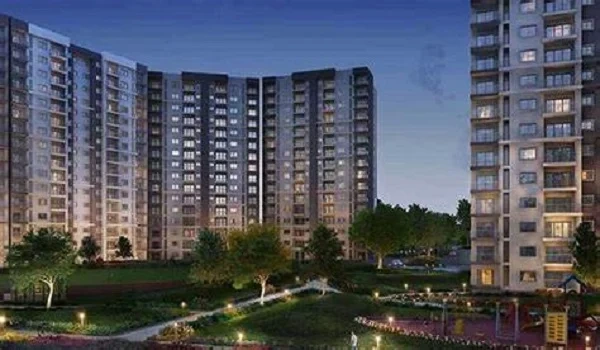
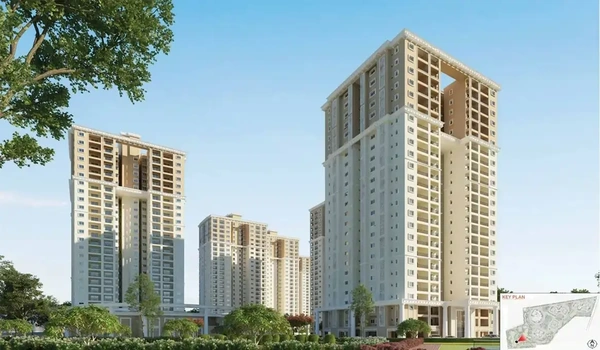
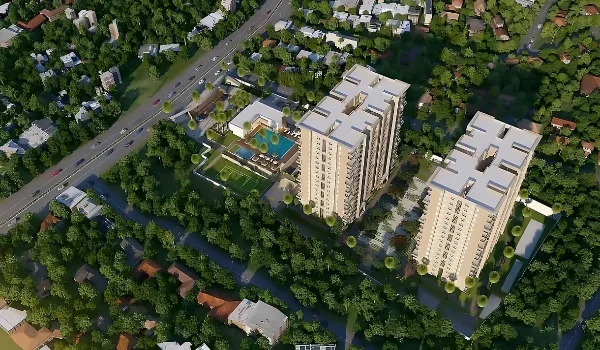
Prestige Garden Breeze is an active real-world example of how pre-launch home loans work, holding official Karnataka RERA approval under number PRM/KA/RERA/1251/308/PR/080926/008919. Launched on September 11, 2026, as Phase 7 of the 180-acre "The Prestige City" township, this 10-acre project offers 655 luxury apartments across 4 tall towers on Sarjapur Main Road (SH 35) in Ittangur, close to Yamare Village.

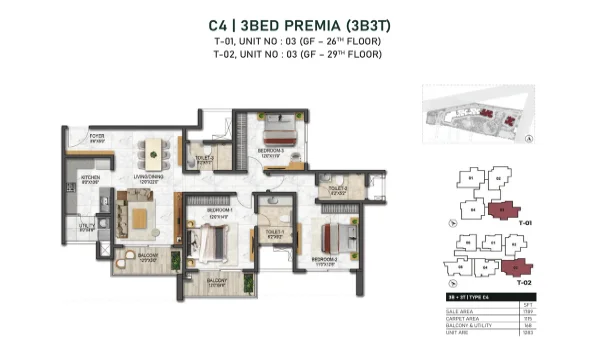
The development features 2 BHK homes (1,080 to 1,140 sq ft), 3 BHK homes (1,470 to 1,790 sq ft), and large 4 BHK penthouses (2,779 to 3,069 sq ft), with base prices starting from ₹1.20 Crore up to ₹3.93 Crore and flat possession scheduled for December 30, 2030. To reserve a home at this stage, buyers place an Expression of Interest (EOI) deposit of ₹15 Lakhs for a 2 BHK or ₹20 Lakhs for a 3 BHK unit.

Apartment Type Built-Up Area Size Starting Price Max 80% Bank Loan
2 BHK (2 Bath) 1,080 - 1,140 sq ft ₹1.20 Crore onwards ₹96 Lakhs
3 BHK (2 Bath) 1,470 - 1,570 sq ft ₹1.62 Crore onwards ₹1.296 Crore
3 BHK (3 Bath) 1,720 - 1,790 sq ft ₹1.89 Crore onwards ₹1.512 Crore
4 BHK Penthouse 2,779 - 3,069 sq ft ₹3.56 Crore onwards ₹2.848 Crore

The builder offers a clear 20:20:60 payment plan that matches standard bank loan policies smoothly:

  • Your First 20% Share: You pay 20% of the flat price within 90 days of booking, which covers the bank's minimum down payment rule from your own savings.
  • The 20% Construction Call: Another 20% is due once physical building work starts on-site. The bank can disburse this part from your approved home loan once your own contribution is cleared.

  • The Final 60% at Handover: The bank pays the last 60% balance right when the flat is ready for key handover in December 2030, which keeps your monthly interest costs very low during the 4-year build.

5. Pre-EMI vs. Full EMI: What Should You Pay While the Flat Is Built?


A Pre-EMI plan asks you to pay only the simple interest on the actual loan money released so far, keeping your monthly costs light while the building goes up. A Full EMI plan starts your full monthly installment right away, paying down both loan interest and principal from the very first month.

Feature Pre-EMI Option Full EMI Option
What You Pay Only the interest on cash released so far Regular interest plus a cut of the loan principal
Costs During Build Very low at first; grows slowly as floors go up Higher; you pay full monthly bills from day one
Cutting Your Debt Your original loan balance does not drop yet Your original loan balance starts dropping immediately
Loan Clock Full loan tenure starts only when you get keys Full loan repayment clock starts right away
Best Choice For Buyers who pay house rent while waiting for keys Buyers with good savings who want to save on total interest

6. Real Estate Rules and Safety Checks for Homebuyers


Under Section 4(2)(l)(D) of the real estate law (RERA), builders must place 70% of all buyer and bank payments into a separate project escrow account, preventing them from moving that money to other developments. This legal step guarantees that your loan money is used only to complete your building.

  • Check the RERA Website: Look up the project's official number on your state's online RERA portal to see approved building plans, floor counts, and delivery dates.
  • Read the Encumbrance Certificate: Check the Form 15 report for the past 15 to 30 years to be sure the land has no unpaid private loans or court disputes.
  • Ask for the Bank's NOC: If the builder borrowed money from a commercial lender to buy the plot, make sure that lender writes a formal Non-Objection Certificate (NOC) before you sign.
  • Skip Upfront Schemes: Avoid builder offers that ask the bank to pay out 100% of the loan money before foundation work is even visible.

FAQs


1. Can I get a home loan without a RERA number?

No. Banks cannot give you a loan without a valid RERA number. Builders need this registration before they can legally take bookings or sign sale papers.

2. What is an APF code?

It is a code a bank gives a project after checking its land titles and permits. An APF code means the bank has already cleared the builder's paperwork, so your own loan gets approved much faster.

3. How does the 20:20:60 payment plan work with a loan?

You pay 20% down from your own pocket, then another 20% once construction begins. The bank pays the final 60% at handover, which keeps your monthly interest very low while the flat is being built.

4. What happens to my loan if the builder delays the project?

The bank pauses payouts since money is only released as building stages finish. Under RERA, the builder must pay you monthly interest for the delay or refund your money with interest if you cancel.

5. How many years do I get to repay the loan?

Most banks offer up to 30 years, as long as you clear the debt before you retire (usually by age 60 for salaried jobs and 65 for self-employed work). This includes both the build time and your regular EMI years.

Enquiry
Enquire Now