GST on under-construction apartments explained

Featured Image of GST on under-construction apartments explained


GST on under-construction apartments is a tax of 5% on standard homes and 1% on low-cost flats, calculated on two-thirds of the price after taking off one-third for land value. You pay this tax only if you buy a home before the builder gets an Occupancy Certificate (OC) or Completion Certificate (CC) from the local city office. If you buy a ready flat that has its OC or CC in hand, you pay zero GST because the law treats it as an existing physical building rather than a service.

Right now, builders cannot claim any tax back on materials like steel or cement. Because of this, they cannot pass any tax savings on to you. A flat only counts as an affordable home if the total price stays under ₹45 lakh. It must also stay under 60 square meters in big cities or 90 square meters in smaller towns. When you know these basic rules, checking your builder’s bill is simple. It protects your hard-earned cash and helps you plan your home buy without stress.
What Is GST on Under-Construction Property and How Does It Apply?


GST on under-construction property is a tax on building work that applies when you pay money before the project finishes, with tax on 66.67% of your flat’s total deal value. The tax rules treat one-third (33.33%) of the flat price as the cost of land, and this land share is free from any tax.

Because of this one-third land cut, the top 7.5% building tax drops down to 5% for regular flats, while the 1.5% rate drops down to 1% for low-cost flats.

  • Taxable base: Exactly two-thirds of the deal price, with no tax on state stamp fees, registry costs, or power meter deposits.
  • Standard tax rate: 5% with no ITC for flats priced above ₹45 lakh or built bigger than the size cap.
  • Affordable tax rate: 1% with no ITC for flats priced at or below ₹45 lakh that fit city size limits.
  • Zero-tax homes: Ready flats where you pay your money only after the builder gets the final city completion paper.

Current GST Rates for Residential Real Estate


Residential homes fall into two clear tax slabs: 1% for low-cost homes and 5% for regular flats, with both rates figured after taking off the land cut. This two-tier rule took the place of the old 12% rate so home buyers can check their bills easily.

Residential Property Category Effective GST Rate Carpet Area Constraint Price Ceiling Applicable Input Tax Credit (ITC)
Affordable Housing (Metros) 1% Up to 60 sq.m (~645 sq.ft) Maximum ₹45 Lakh Not Available
Affordable Housing (Non-Metros) 1% Up to 90 sq.m (~968 sq.ft) Maximum ₹45 Lakh Not Available
Standard Residential (Non-Affordable) 5% Any size over the cap Any price over ₹45 Lakh Not Available
Commercial Spaces in RREP Projects 5% Max 15% of total built area Set by market Not Available
Ready-to-Move Units (with OC/CC) 0% (Tax-Free) No cap No cap Not Applicable

These tax sums are split down the middle by the central government and your state, giving 2.5% CGST and 2.5% SGST on a standard 5% home.

How Is GST Calculated on an Under-Construction Apartment?


GST math uses a fixed one-third land cut, so you pay tax only on the actual brick-and-mortar work and not on the soil under the building. To find your tax, take your total flat price, drop one-third of that sum, and apply your tax rate to the two-thirds left over.

For a standard flat with a total cost of ₹80,00,000, here is how the math works out in four steps:

  • Total Agreement Price: ₹80,00,000
  • Land Value Cut (One-Third): ₹26,66,667
  • Taxable Building Part (Two-Thirds): ₹53,33,333
  • GST to Pay (at 7.5% on the building part): ₹4,00,000 (which is exactly 5% of the total ₹80,00,000 price tag).

Extra fees on your builder sheet, like floor rise fees, view charges, club dues, and car parking spots, count as part of the building work and draw the same 5% tax.

Evaluating GST on Under-Construction Luxury Townships: Prestige Garden Breeze


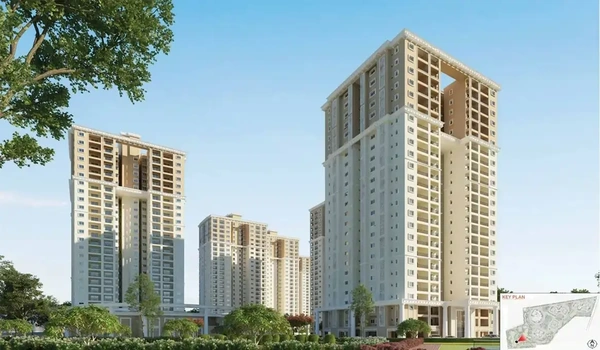
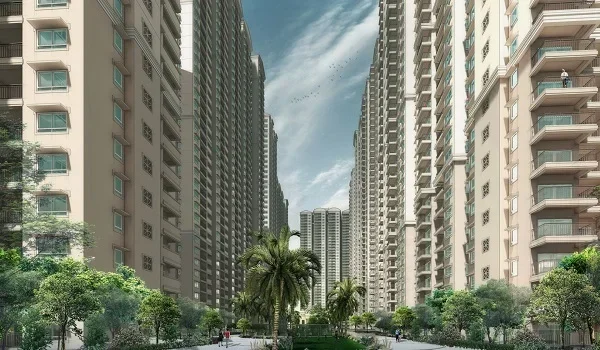
Prestige Garden Breeze is a new building project spread over 10 acres with 655 homes, where base prices from ₹1.2 Crore put every unit into the 5% GST tax slab. Set at Ittangur on Sarjapur Main Road (SH 35) in East Bangalore, this project is Phase 7 of the big 180-acre The Prestige City township and holds RERA approval under number PRM/KA/RERA/1251/308/PR/080926/008919.

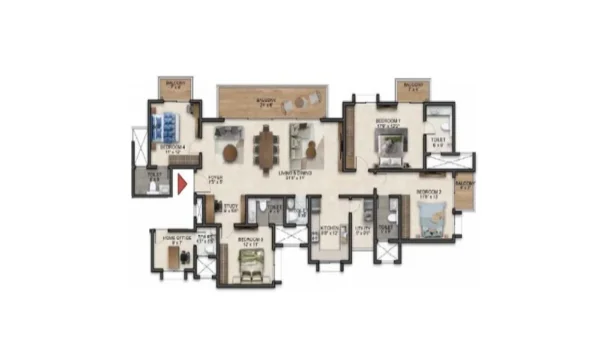
The plan brings 4 high-rise towers (Tower 1 with 2B+G+27 floors, and Towers 2, 3, and 4 with G+30 floors) with 2, 3, and 4 BHK layouts from 1,080 sq ft to 3,069 sq ft, with building work running toward a completion date of 30 November 2030 and key handover on 30 December 2030.

Cost Component Amount for 2 BHK (1,080 sq ft) Tax Rate / Rule Applied
Base Agreement Price ₹1,20,00,000 Total Flat Cost
Land Value Deduction ₹40,00,000 One-Third (33.33%) Tax-Free
Taxable Building Base ₹80,00,000 Two-Thirds (66.67%) Taxable
Payable GST (Effective 5%) ₹6,00,000 2.5% CGST + 2.5% SGST
Karnataka Stamp Duty (5%) ₹6,00,000 State Property Tax
Karnataka Registration (1%) ₹1,20,000 State Registry Fee
Total Statutory Extra Outlay ₹13,20,000 Complete Government Charges

The builder sells these homes under a 20:20:60 payment plan (20% paid in 90 days from booking, 20% when building starts, and 60% on key handover), so the 5% tax is split across each bill:

  • Booking Step (20% share = ₹24,00,000): You pay ₹1,20,000 as GST in the first 90 days.
  • Work Start Step (20% share = ₹24,00,000): You pay another ₹1,20,000 as GST when tower work starts on site.
  • Possession Step (60% share = ₹72,00,000): You pay ₹3,60,000 as GST if billed before the OC paper comes; if this final bill comes after the OC is signed, you pay zero GST on this last step.

For large 3 BHK homes (1,470 to 1,790 sq ft from ₹1.62 Cr to ₹1.89 Cr) and 4 BHK penthouses (2,779 to 3,069 sq ft up to ₹3.93 Cr), the same 5% tax holds because all homes cost far more than ₹45 lakh.

Impact of Input Tax Credit (ITC) Removal on Developers and Homebuyers


The move to end Input Tax Credit gave buyers fixed rates of 1% and 5%, while barring builders from passing material tax credits down to homebuyers. Under the old rules, builders billed 12% GST and said they would return tax savings on steel, cement, and tiles, which led to long fights and confusing math.

  • Builder shopping rule: Builders must buy at least 80% of their goods and trade help from tax-registered shops to keep the 5% tax slab.
  • Cement rule for builders: If a builder buys cement from an unregistered shop, the builder must pay a 28% tax fine out of pocket.
  • Other material shortfall: Missing the 80% mark on other goods brings an 18% tax hit for the builder under reverse charge rules.
  • Clear bills for buyers: You get neat, clear bills with no need to wait for builders to figure out old material credits.

Under-Construction vs. Ready-to-Move Properties: Financial and Tax Comparison


Under-construction flats carry a 5% GST tag with step-by-step bills, while ready-to-move homes have zero GST but call for all the cash up front. Picking between these two paths sets how much cash you pay on day one and how you run your home loan.

Feature or Factor Under-Construction Flat Ready Flat (with OC)
GST Rate 1% or 5% 0% (Tax-Free)
Stamp Duty and Registration 5% to 7% (State Laws) 5% to 7% (State Laws)
Payment Schedule Small Step Payments Full Cash at Once
Base Price per Square Foot Often Cheaper at Launch Higher Finished Price
Wait Time for Keys 2 to 4 Years Move In Right Away
Rental Income Start Starts After Possession Starts Immediately

Even with an extra 5% tax on an ongoing project like Prestige Garden Breeze, early launch prices can often save you more total cash than paying a high price for a finished home.

Essential Checklist for Homebuyers Paying GST on Under-Construction Flats


Homebuyers should always ask for printed tax bills that show the builder's 15-digit GST code, making sure the tax applies only to construction stages and not refundable deposits. Taking a few fast steps keeps your money safe throughout the sale.

  • Check the Builder’s GST Code: Look up the 15-digit tax code on the government site (gst.gov.in) before paying your token cash.
  • Scan Extra Charges: Make sure the builder does not add 5% GST to returnable funds, water links, or power meter fees.
  • Check Stage Bills: Read every step bill with care to see that the 5% (or 1%) tax applies only to that exact bill sum.
  • Handle TDS the Right Way: If your home costs over ₹50 lakh, cut 1% TDS on the base flat price and keep it apart from the GST sum.
  • Ask for Final Proof: When you get your keys, take a paper showing all past taxes are paid and that zero GST is due after the OC date.

FAQs


1. What happens to GST if I cancel an under-construction flat booking?

Your builder can give you a credit note to pay back your token cash and the GST paid if you cancel in the same tax year. If you cancel after the yearly tax date ends, the builder cannot pull that tax back from the government and will refund only your base booking cash.

2. Are car parking charges subject to the same GST rate as the apartment?

When you buy a parking slot inside your main home agreement, it counts as part of the home and draws the same 5% tax. If you buy a parking slot later through a separate paper, tax teams can treat it as an open parking trade with an 18% tax.

3. Does GST apply to resale transactions of under-construction apartments?

If you buy an ongoing flat from the first owner, you pay the 5% GST only on the unpaid building steps you will pay to the builder. The extra profit cash you hand straight to the first owner carries zero GST.

4. Are external infrastructure development charges (EDC/IDC) taxable under GST?

External site fees and link charges billed by the builder form part of the building work, so they attract the regular 5% tax. If the local city office or water board bills you directly under your own name, those direct government fees carry no GST.

5. Is GST applicable on long-term leasehold residential plots?

Getting a plot on lease for 30 years or more from a state body or town board is free from any GST. If you take a long-term plot lease from a private firm, it brings an 18% tax hit unless it is part of a state housing scheme.

Enquiry
Enquire Now